natuur
De Kerf: what happens when you dig a gap in the sea dune
De Kerf is a cut through the zeereep north of Bergen aan Zee, where salt sea water was allowed to flow into the dune area behind the first row of dunes. There is a viewpoint at 52.686, 4.640 from which you look out over the whole area.
The front row of dunes along the shore, the zeereep, has been kept as closed as possible for centuries here. Hold the sand, keep the water out. At De Kerf the opposite was done: a gap was dug through it.
Why you would deliberately open a sea defence
A dune area completely cut off from the sea turns fresh. The vegetation changes, species bound to salty conditions disappear, and the landscape comes to a standstill. By cutting a kerf through the zeereep, sea water can reach the area behind it during storms and high water. That brings back salt, sand and movement.
What you see there now
From the viewpoint you look out over a plain that looks different from the rest of the dune: more open, wetter, with vegetation unlike the pine forest further on. The best moment is after a spell of storms, when you can read from the sand pattern how far the water came.
How you get there
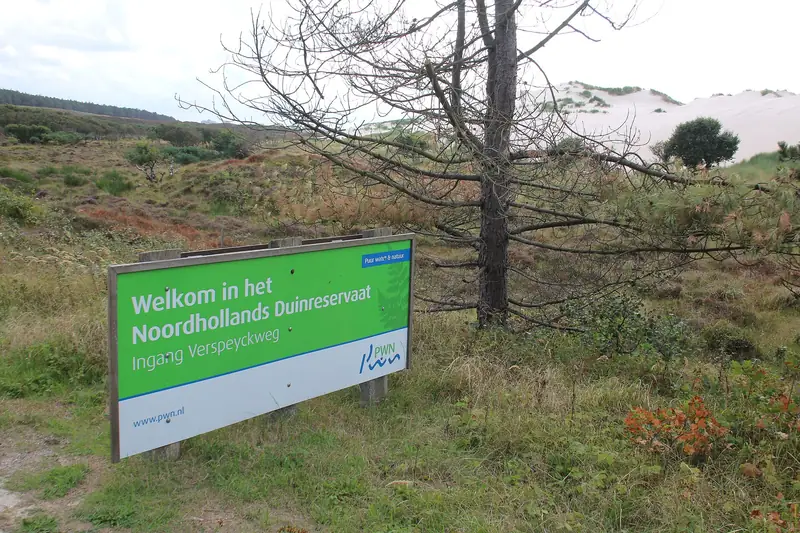
The viewpoint lies between Bergen aan Zee and Schoorl aan Zee, in the Noordhollands Duinreservaat, managed by PWN, the regional water company. For the dune reserve you need a duinkaart (an annual dune pass) or a day pass, unlike the Schoorlse Duinen (the Schoorl dunes) next door, where Staatsbosbeheer, the Dutch state forestry service, charges no entrance fee. Two areas side by side, two regimes.
What this article covers
De Kerf
De Kerf is a viewpoint above a cut dug through the zeereep, the front dune ridge, roughly 2.9 kilometres north of Bergen aan Zee as the crow flies. Through that gap sea water can run into the area behind the first row of dunes instead of being held back. The site is registered to PWN.
Noordhollands Duinreservaat
The Noordhollands Duinreservaat is managed by N.V. PWN Waterleidingbedrijf Noord-Holland, the provincial water company, and is a designated Habitats Directive site. Unlike the Schoorlse Duinen of Staatsbosbeheer next door, you do need an access pass here: a duinkaart (an annual dune pass) or a day pass.
Bergen aan Zee
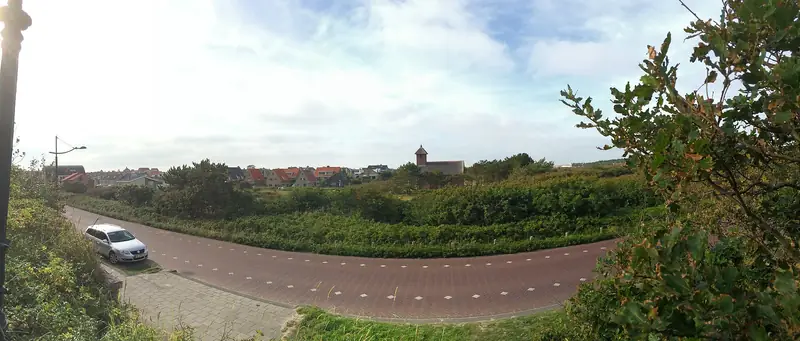
Wide beach, dunes and sea aquarium