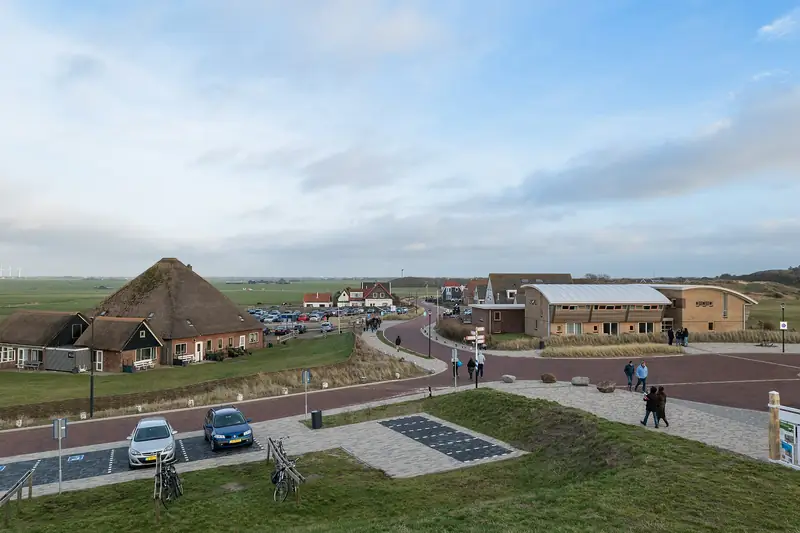
Camperduin: beach, parking and the edge of the Hondsbossche Duinen
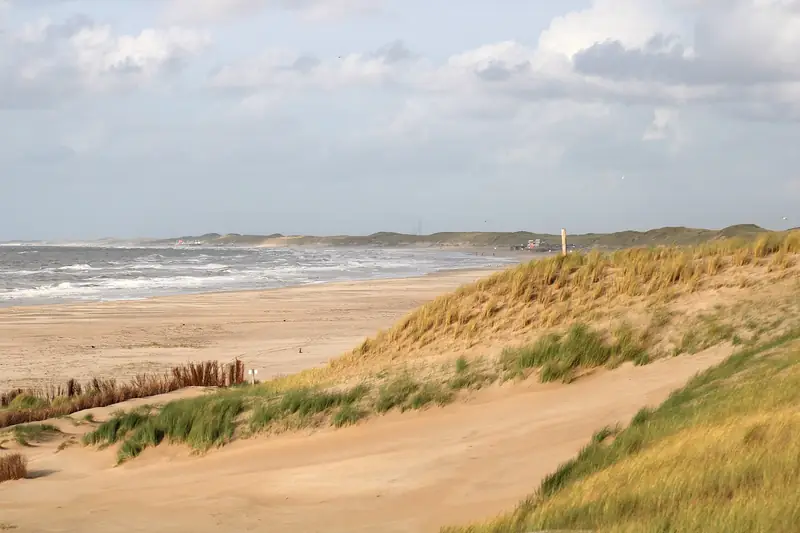
Camperduin is the point where the Hondsbossche Zeewering turns into natural dune. The village has 265 inhabitants, three beach accesses (17, 18 and 19) and a large car park about 300 metres from the beach.
The village itself does not amount to much. 265 inhabitants, 1.10 km2, about 12 kilometres north-west of Alkmaar. What makes Camperduin worth the trip lies on the coast.
Why is Camperduin exactly here?
Because this is the spot where the hard sea defence stops and the dune begins. After the Sint-Elisabethsvloed (St Elizabeth’s flood) of 1421 the sea washed away the dunes between Camperduin and Petten. A dyke was built between the two places, the beginning of the Hondsbossche Zeewering (the Hondsbossche sea defence). The stone version with basalt cladding was built between 1872 and 1877 and is 4.3 kilometres long.
You no longer see that dyke. Between 2013 and 2015, 35 million cubic metres of sand were dumped over it. What lies there now is called the Hondsbossche Duinen: a wide beach with dune landscape. The old dyke is still there, under the sand.
Where can you park?
In the large car park about 300 metres from the beach, with room for around 1.500 cars and five disabled parking spaces.
Watch the rate. Camperduin does not fall under the paid parking zones of the gemeente Bergen (Bergen municipality), which apply only in Bergen, Schoorl, Bergen aan Zee, Egmond aan Zee and Hargen aan Zee. The municipal rate of 2.45 euros per hour therefore does not apply here, and various day rates circulate online. Read the sign at the entrance.
From Camperduin towards Petten there are three small car parks at De Putten where you park for free if there is space.
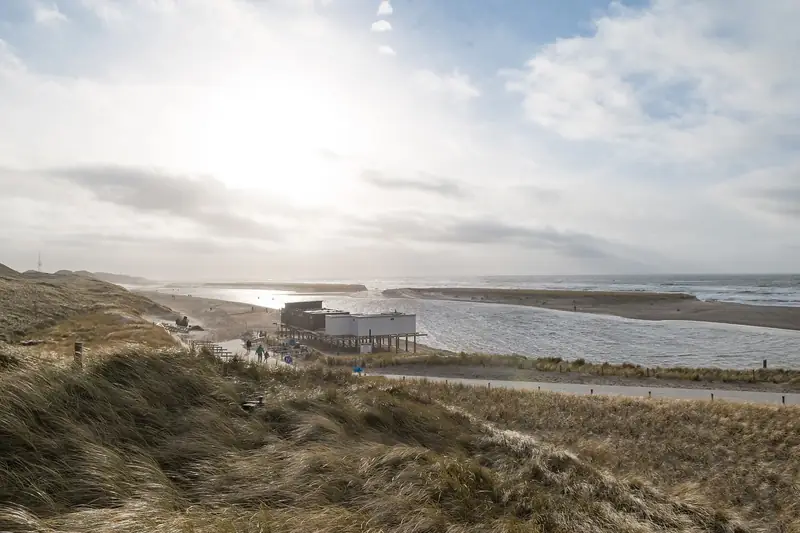
The beach has three accesses: beach access 17 (north), 18 (centre) and 19 (by the lagoon).
Can the dog run off the lead on the beach?
In the beach season, from 1 May to 1 October, your dog may run off the lead on the beach before 10.00 and after 19.00. In between, dogs must be on a lead. Outside the season the rules are wider. On 1 January 2027 new beach rules come into force that bring the dog rules on all beaches of the gemeente Bergen into line. Check the municipality’s beach rules before you set off.
What is there to see besides the beach?
Just behind the former sea defence lies De Putten, about 20 hectares of bird reserve run by Natuurmonumenten, part of Natura 2000. Not a natural area: clay was dug here to strengthen the dyke. Avocet, common tern and black-headed gull breed there. In spring and autumn bar-tailed godwit, dunlin and redshank drop in, in winter bearded reedling and hen harrier.
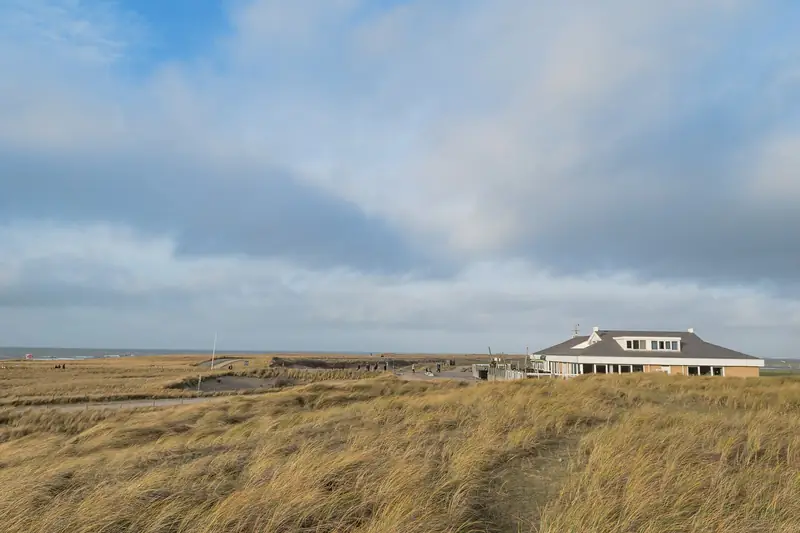
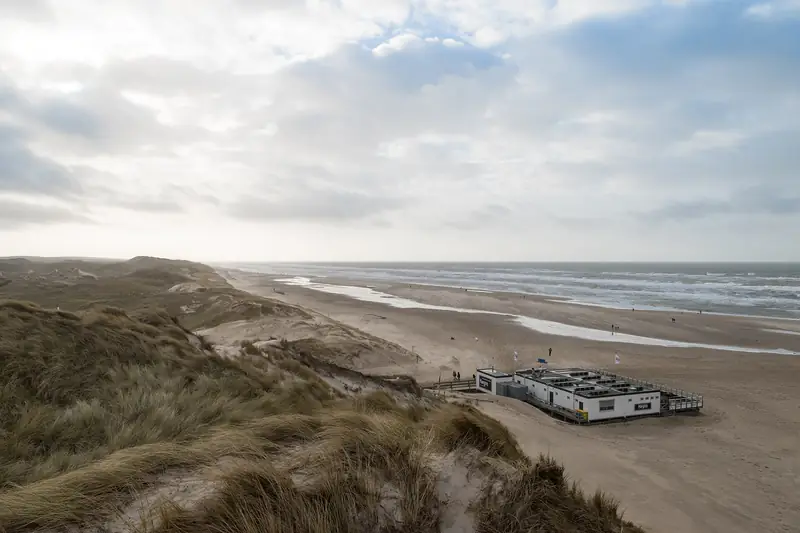
On the village side stands the Hargermolen, a polder mill from 1804. On the beach are beach pavilion Struin and Beach Restaurant Prince George, in the village Strandhotel Camperduin.
Finally. When it is busy, the gemeente Bergen deliberately sends traffic from the fuller beaches on to Egmond aan Zee, Hargen aan Zee and Camperduin. Camperduin is officially an overflow beach. On a warm Sunday, “village of 265 inhabitants” therefore says nothing about how full the car park is.
Eating and sleeping here
Eating in Camperduin
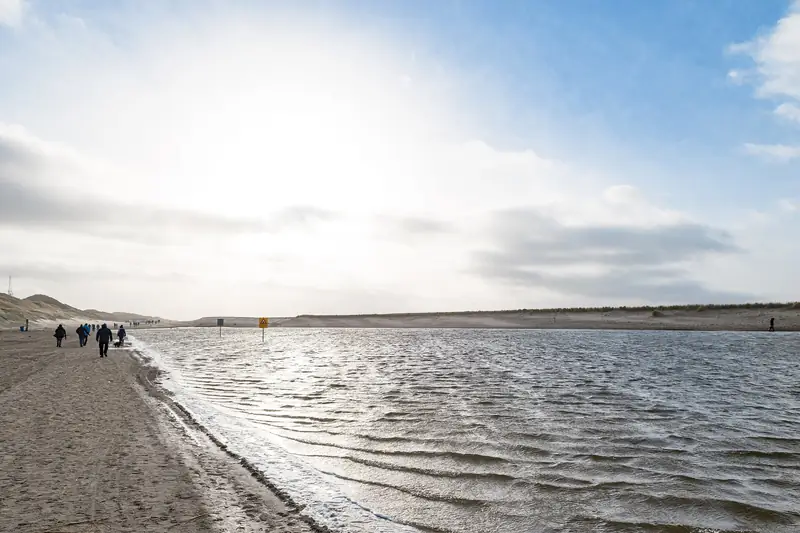
Camperduin has few places to eat but they are well placed: beach pavilions right on the sea and places by the lagoon that appeared after the reinforcement of the Hondsbossche Zeewering. It is busy in high season, because the car park draws day trippers from a wide area.
Sleeping in Camperduin
Camperduin is small: a handful of places to stay at the southern end of the Hondsbossche Zeewering sea defence. What you are buying here is closeness, because from almost every address you are on the beach or on the dyke within a few minutes.
More photos
To the beach
.jpg)
.jpg)
.jpg)

.jpg)
Nature nearby
Wreck of HMS Prince George
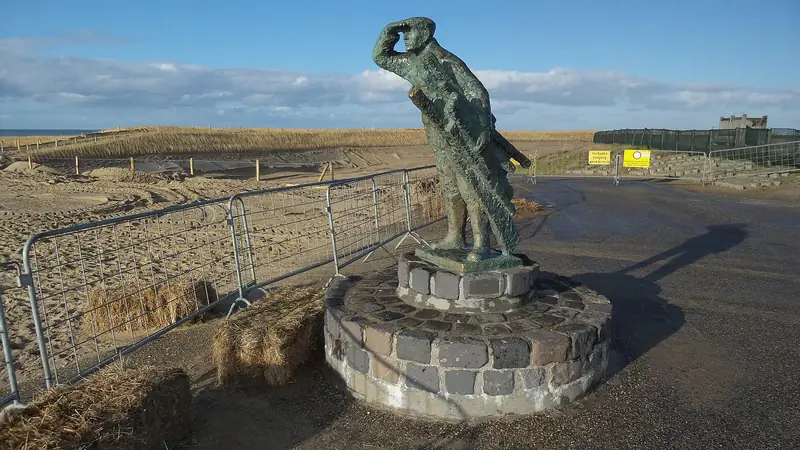
The wreck of HMS Prince George lies under the beach north of Camperduin. The British battleship ran aground on 28 December 1921 on groyne 24 of the Hondsbossche Zeewering, the sea defence there, and at the end of July 2014 disappeared under the sand pumped ashore for the coastal reinforcement. A line of poles on the beach marks the spot.
1.2 km
Hondsbossche Zeewering
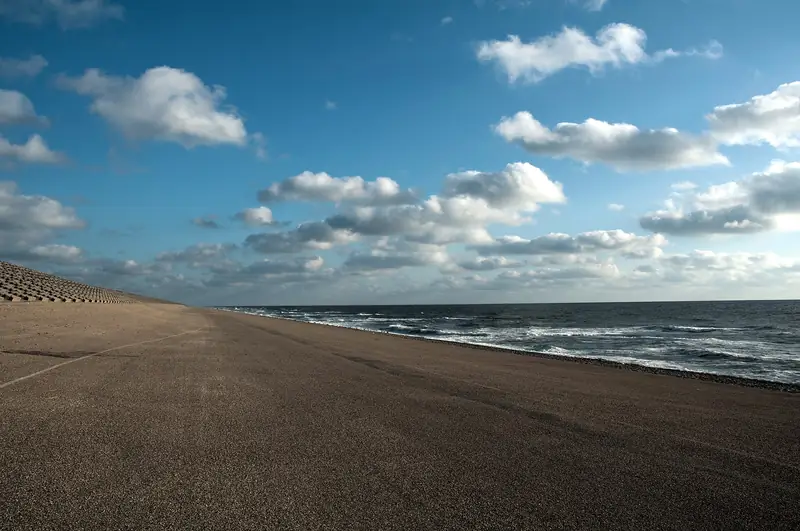
The Hondsbossche Zeewering is a 5.5 kilometre dyke between Camperduin and Petten, raised to delta height in 1981: 11.5 metres above NAP. Since the reinforcement of 2013-2015 the basalt dyke lies entirely under the sand, with a beach and dune area 300 metres wide in front of it.
2.2 km
Catrijper Nok
At 55.4 metres the Catrijper Nok is the highest dune in the Netherlands and the highest point in the province of Noord-Holland, taller than the better-known Klimduin at 51 metres. It stands in the Schoorlse Duinen (the Schoorl dunes), managed by Staatsbosbeheer, with a stairway of 249 steps to the top.
2.5 km