Groet: parking, the dunes and the smallest town hall in the Netherlands
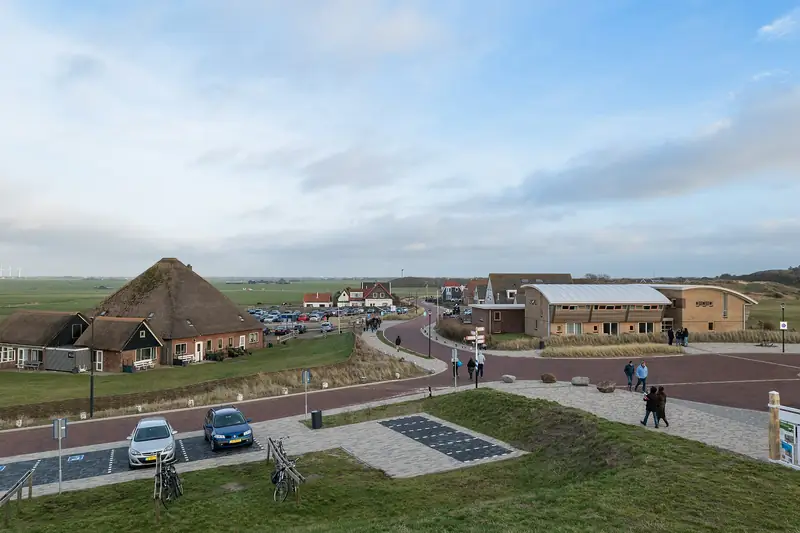
Groet is a village of 1,540 inhabitants in the municipality of Bergen, 2.2 kilometres from the North Sea. On the Kerkbrink stands the smallest town hall in the Netherlands, 6.75 by 4.25 metres, and parking on the street is free.
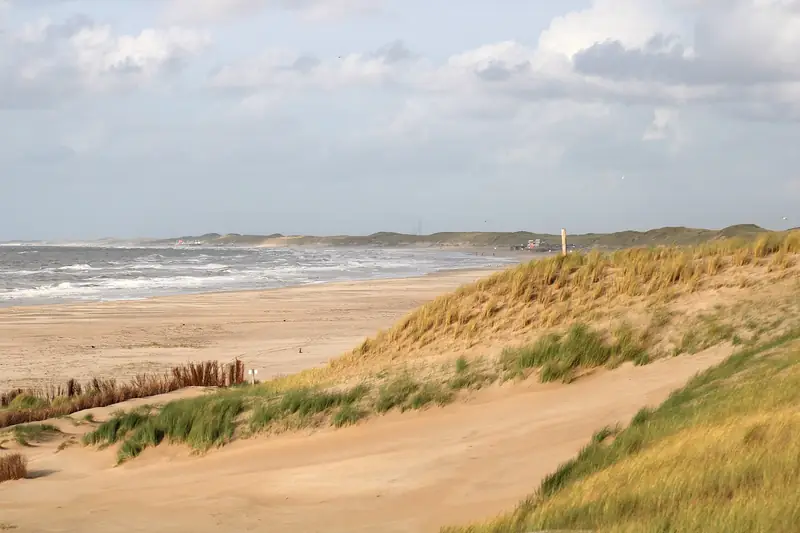
The Schoorlse Duinen begin directly west of the village, the highest and widest in the Netherlands: a top at 55.4 metres, five kilometres wide, more than 60 kilometres of walking path. Supermarket at 400 metres, GP at 1.5 kilometres, nearest station at 12 kilometres.
Where can you park?
On the street, free. Groet is not on the list of paid parking areas of the gemeente Bergen (the municipality of Bergen). That list applies only in Bergen, Schoorl, Bergen aan Zee, Egmond aan Zee and Hargen aan Zee.
Watch out if you drive on to the sea. Hargen aan Zee is 0.7 kilometres away and does fall under paid parking, from 1 March to 1 November every day from 10.00 to 19.00. Camperduin (1.6 kilometres) is, like Groet, not on that list, but private sites there do charge. Read the sign.
What should you have seen?
At Kerkbrink 19 stands the smallest town hall in the Netherlands: 6.75 by 4.25 metres, with 1639 in the gable stone. Inside were a council chamber, a small hall and a lock-up in the cellar. Next to it stand the Witte Huisjes (the white cottages), built as poorhouse dwellings for two large families.
At Kerkbrink 1 the Witte Kerkje (the white church) stands on a mound, with a wooden tower and room for 120 people. Since 1805 Groet and Schoorl have shared one minister, turn and turn about.
At Hargerweg 12 the Groetermolen turns, a grondzeiler (a ground-sailer windmill) from 1890 with a span of 21.5 metres. Its predecessor was lost to a lightning strike on 4 October 1889. Until 1977 it kept the 220 hectares of the Groeterpolder dry on wind power alone.
Can the dog run free on the beach?
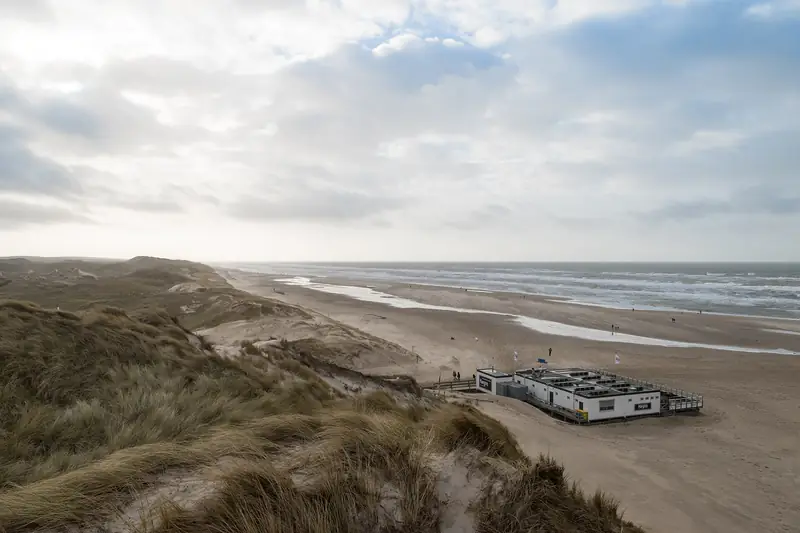
In summer before 10.00 and after 19.00. In between he may come on the lead to the activity beaches (orange posts), not to the sunbathing beach (yellow) or the naturist beach (pink). In winter more is allowed. Bergen adopted new beach rules in March 2026, which only come into force in 2027.
How do you get there without a car?
By bus line 151 from Connexxion, between St. Maartenszee Goudvis and Alkmaar Station. Stops in and around the village: Kerkbrink, De Bokkesprong, Houtendijk, Carpe Diem and Herenweg/Dokterspost. On foot: the European walking route E9 runs through Groet, here the Noordzeepad or Hollands Kustpad.
What is there to do in summer?
Every Monday between 1 July and 25 August there is ZomerGroet around the church, from 15.00 to 21.00: food trucks, stalls, live music.
Finally, something you do not see. At the foot of the dunes, west of the cycle path to Groet, the Sephardic Jews of Amsterdam buried their dead from 1602 onwards. Amsterdam refused them a grave inside the city, Alkmaar did cooperate. Between 1616 and 1626 at least 52 sets of remains were moved to Ouderkerk aan de Amstel. A building ban rests on the plot, now woodland.
Eating and sleeping here
Eating in Groet
Groet is a ribbon village along the Heereweg, the road between Schoorl and Camperduin. Nearly all the places to eat sit on that road, with the Schoorlse Duinen directly to the west. It is quieter than Schoorl and you are just as close to the dune area.
Sleeping in Groet
Groet is a ribbon village between Schoorl and Camperduin, with the Schoorlse Duinen directly to the west. What is on offer is mostly campsites and holiday homes. You are as close to the dunes here as in Schoorl, but with fewer day trippers around you.
To the beach
Nature nearby
Catrijper Nok
At 55.4 metres the Catrijper Nok is the highest dune in the Netherlands and the highest point in the province of Noord-Holland, taller than the better-known Klimduin at 51 metres. It stands in the Schoorlse Duinen (the Schoorl dunes), managed by Staatsbosbeheer, with a stairway of 249 steps to the top.
1.3 km
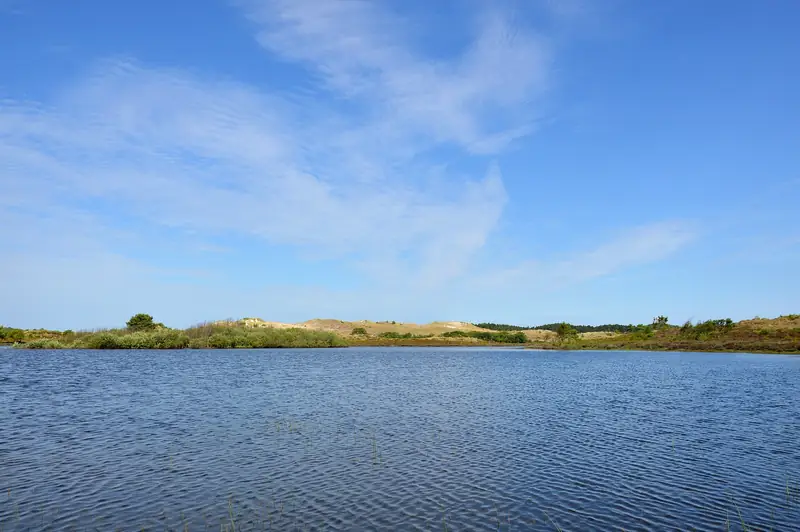
Schoorlse Duinen
The Schoorlse Duinen (Schoorl dunes) hold the highest dune in the Netherlands: the Catrijper Nok, 55.4 metres, with a staircase of 249 steps to the top. The area belongs to Staatsbosbeheer, is open all year round and has more than 60 kilometres of walking paths.
2.3 km
Wreck of HMS Prince George
The wreck of HMS Prince George lies under the beach north of Camperduin. The British battleship ran aground on 28 December 1921 on groyne 24 of the Hondsbossche Zeewering, the sea defence there, and at the end of July 2014 disappeared under the sand pumped ashore for the coastal reinforcement. A line of poles on the beach marks the spot.
2.4 km