Schoorl: parking, the dunes and the dog
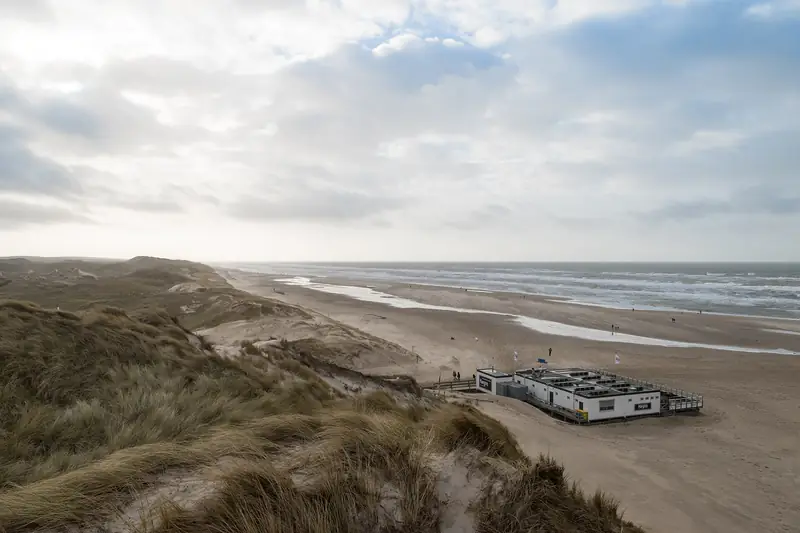
The beach at Schoorl aan Zee can be reached only on foot or by bike, along the five-kilometre Schoorlse Zeeweg cycle path. You leave the car in the village, where parking costs €2.45 per hour.
Where do you leave the car?
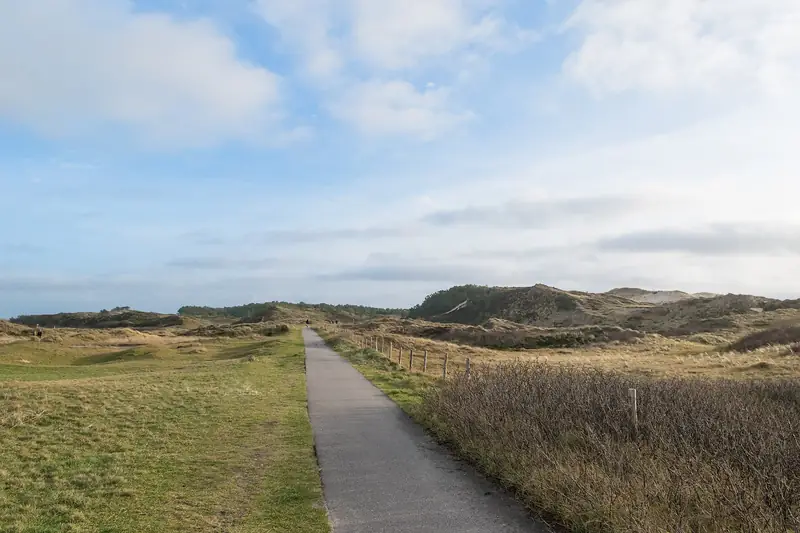
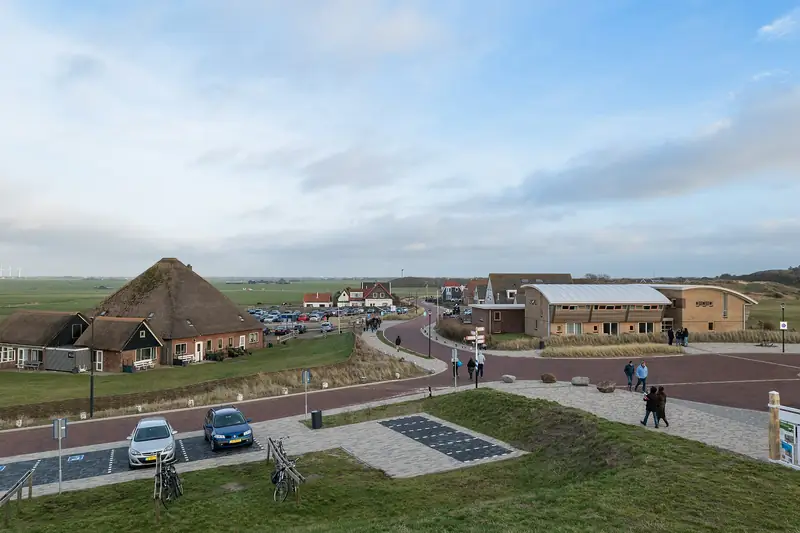
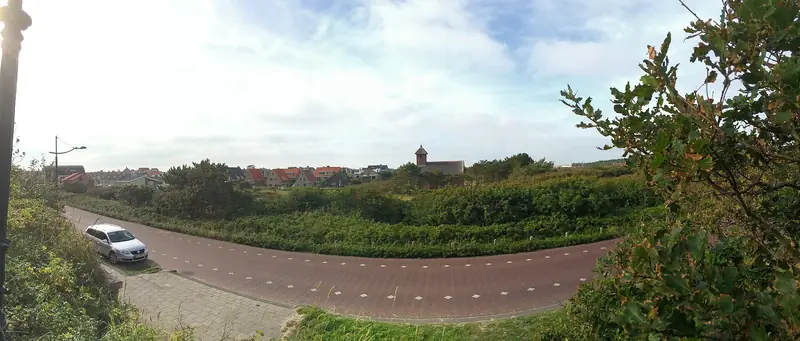
In the village, on the Oorsprongsweg, the Molenweg or the Sportlaan. The car gets you no further than the village: you reach the beach of Schoorl aan Zee along the Schoorlse Zeeweg, a surfaced cycle path of five kilometres that starts close to the Buitencentrum (the visitor centre).
Parking costs €2.45 per hour. From 1 March to 1 November you pay that every day between 10.00 and 19.00, outside those hours the car stands for free. From 1 November to 1 March you pay only on Saturday and Sunday. Paid parking applies at the Buitencentrum at Oorsprongweg 1 as well; navigate there on Heereweg 62, the road opposite it is the Oorsprongweg. Without a car: bus 151 runs from Alkmaar station to the Idenslaan stop.
Where is the highest dune in the Netherlands?
On the Catrijper Nok, 55.4 metres above NAP (the Dutch ordnance datum) and with that the highest point in Noord-Holland. A stairway of 249 steps runs to the top. Until 2014 that dune had no name. Forest ranger Jeroen Pater suspected it was higher than the climbing dune by the radar post, and the difference came to about one and a half metres. RTV-NH ran a competition to name it, 145 entries, won by 18-year-old Wendy de Vroone from Wognum. When the stairway was under threat in 2021, the 38,000 euros needed were crowdfunded within three days. Het Klimduin, 51 metres, borders straight onto the village.
Can the dog run free?
From 1 March to 1 September on the lead only, because woodcock and nightjar nest on the ground here. Outside that period he may run free if he comes when called. In grazing areas dogs are not allowed at all, and that has become more relevant since August 2026: Staatsbosbeheer is putting Kempen heath sheep and a couple of goats in there against the encroaching grass. Watch the signs. The province is also working on a new Natura 2000 management plan with a year-round lead requirement, so check the rule before you go.
Why does pine forest grow in the dunes?
Because it was planted. From 1863 onwards to stop the drifting sand, and again on a large scale in the depression years of the thirties as job creation. There is now about 950 hectares of conifer forest, with the Austrian pine as the mainstay. That came at a price: conifer forest evaporates more than the vegetation that stood there, so the dune valleys dried out. Something did come back for it. The largest population of creeping lady’s-tresses in the Netherlands grows here, and Schoorl was the last dune area where the nightjar bred.
One more practical thing: in the Schoorlse Duinen you may walk on the official paths only, with five exceptions where you are free to roam. Jan Bas z’n tuintje, de Speelkuil, Wulpendal, de Hargerplas and het Groeter Zandgat. Beyond those you keep to the path, however inviting the sand looks.
Eating and sleeping here
Eating in Schoorl
Schoorl has roughly three eating areas: the square at the foot of the Klimduin, the wood around cycle junction 47, and the Heereweg, the road through the village. The Klimduin is the busiest on warm days; the wood is quieter, but you have to walk or cycle to it.
Sleeping in Schoorl
Schoorl has hotels along the Heereweg in the village, campsites on the edge of the wood and holiday houses spread across the area. The village is not on the sea: getting to the beach is still a drive, or a good long ride by bike through the dunes.
More photos
To the beach


Nature nearby
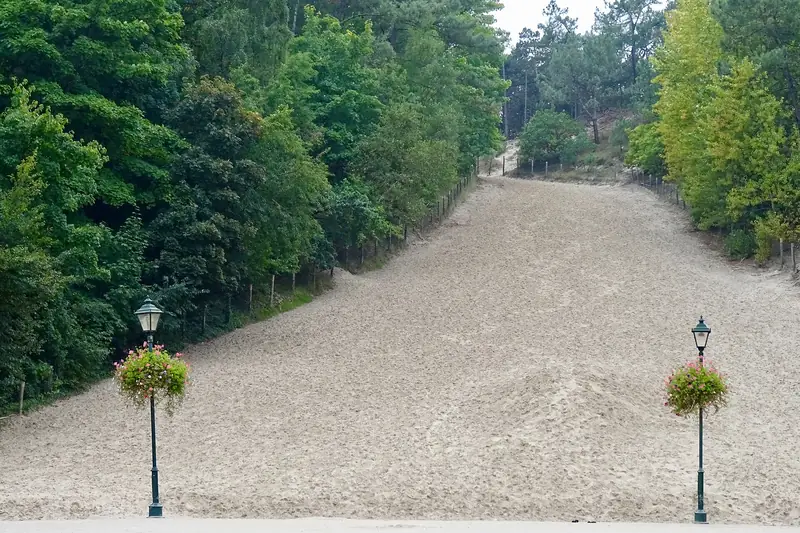
Klimduin
The Klimduin is a dune 51 metres high and roughly 110 metres long, in the middle of the village of Schoorl on the edge of the Schoorlse Duinen (Schoorl dunes). There is no entrance fee, and since May 2025 a bronze statue of Teun de Jager has stood at its foot.
0.1 km
Verwey Woods
The Verwey Woods are two small wooded plots on the eastern edge of Schoorl, managed by Landschap Noord-Holland, with a colony of grey herons in the old beeches. They are named after the biologist Jan Verwey, who bought part of the wood with a villa here in 1950, not after his father, the poet Albert Verwey.
1 km
Catrijper Nok
At 55.4 metres the Catrijper Nok is the highest dune in the Netherlands and the highest point in the province of Noord-Holland, taller than the better-known Klimduin at 51 metres. It stands in the Schoorlse Duinen (the Schoorl dunes), managed by Staatsbosbeheer, with a stairway of 249 steps to the top.
1.5 km