natuur
There is a British battleship off the coast in front of the Hondsbossche Zeewering
The British battleship HMS Prince George ran aground off the Hondsbossche Zeewering in 1921 and is still there today, at roughly 52.734, 4.640. From the sea defence there is nothing to see of it; the wreck lies underwater.
On the map of this stretch of coast, a few hundred metres offshore at the Hondsbossche Zeewering, the sea defence here, there sits a wreck marker. It refers to HMS Prince George, a British battleship from 1895.
What happened
The ship was on its way to be scrapped when it ran aground on the coast by the sea defence in 1921. A photograph has survived, held in the archive, showing the ship listing heavily in front of the dyke. It never came free again.
What you can see of it today
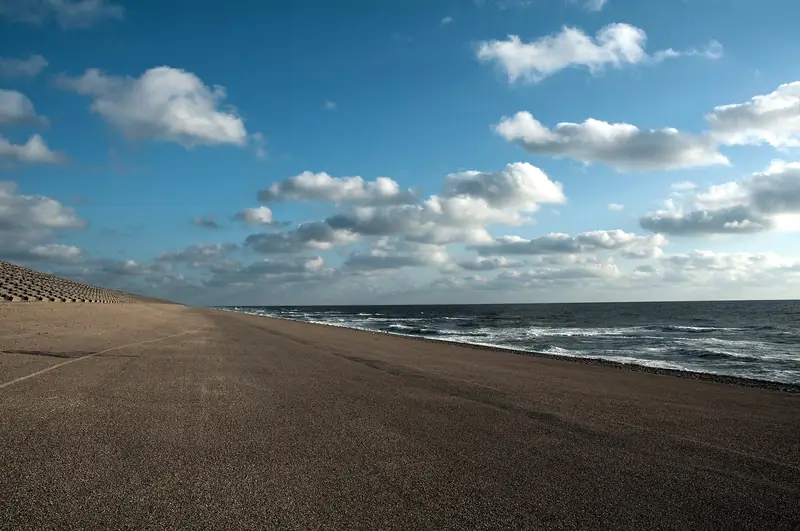
Honestly: nothing. The wreck lies underwater and there is no sign. What it does do is give a stretch of coast that looks bare a story all of a sudden. If you stand on the Hondsbossche Zeewering and look north towards Petten, you are looking out over the spot.
Why so many ships ran aground here
The Hondsbossche Zeewering is an artificial dyke that fills the gap where the dune ridge stops. That exact spot was the weakest point in the coastline for centuries, and that exact spot is where the surf gets most unpredictable in a north-westerly storm. More ships ran aground there. The Norwegian steamship Franeggen also ran onto it, and there are photographs of that in the archive too.
What this article covers
Hondsbossche Zeewering
The Hondsbossche Zeewering is a 5.5 kilometre dyke between Camperduin and Petten, raised to delta height in 1981: 11.5 metres above NAP. Since the reinforcement of 2013-2015 the basalt dyke lies entirely under the sand, with a beach and dune area 300 metres wide in front of it.
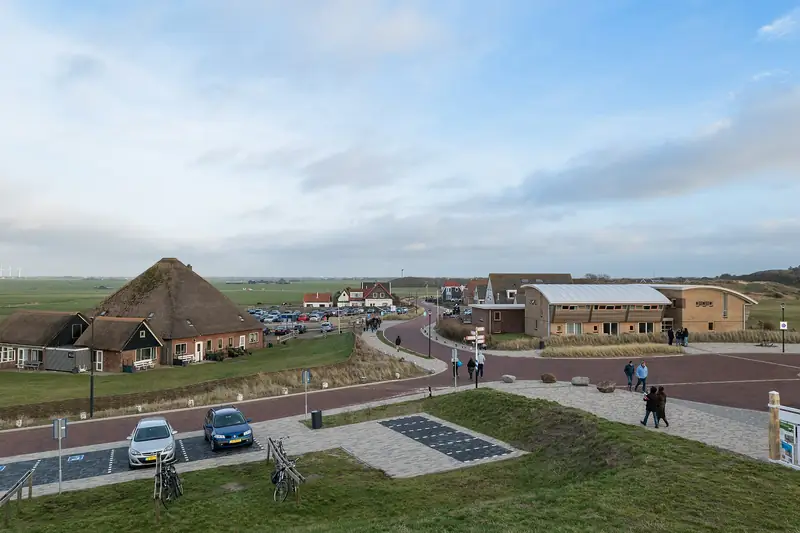
Camperduin
Where the sea defence becomes dune
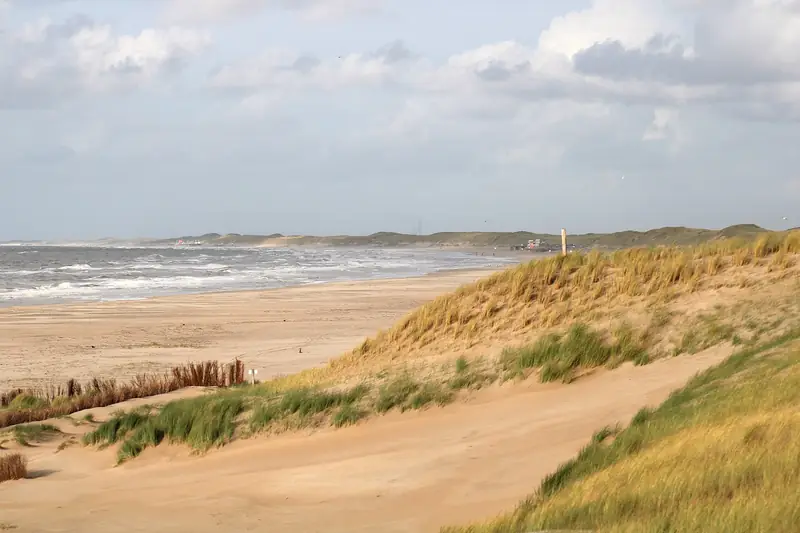
Petten
Palendorp, a broad beach, free parking